
Sex Offender Checks in Brewster County
Texas DPS publishes the statewide registry. It is the first source for people registered at Brewster addresses. Search by name for a known person or by geography for community awareness. NSOPW helps when a concern crosses state lines.
The registry is not a jail roster, full criminal history, or complete court docket. A profile reflects data reported under Chapter 62. Verify the current entry and contact its listed authority when details need clarification.
Registration data can include a geographic description when a conventional street address is not available. That distinction matters in rural Brewster County, where distance, unincorporated communities, and large tracts can make a map marker less intuitive than an urban address. Read the profile's wording before interpreting the point on a map.
Search DPS by Brewster County
Open the Texas DPS registry search and choose a name, address, county, ZIP, or map option. Use a full address and ZIP for a local radius search. Select Brewster County for a broader view.
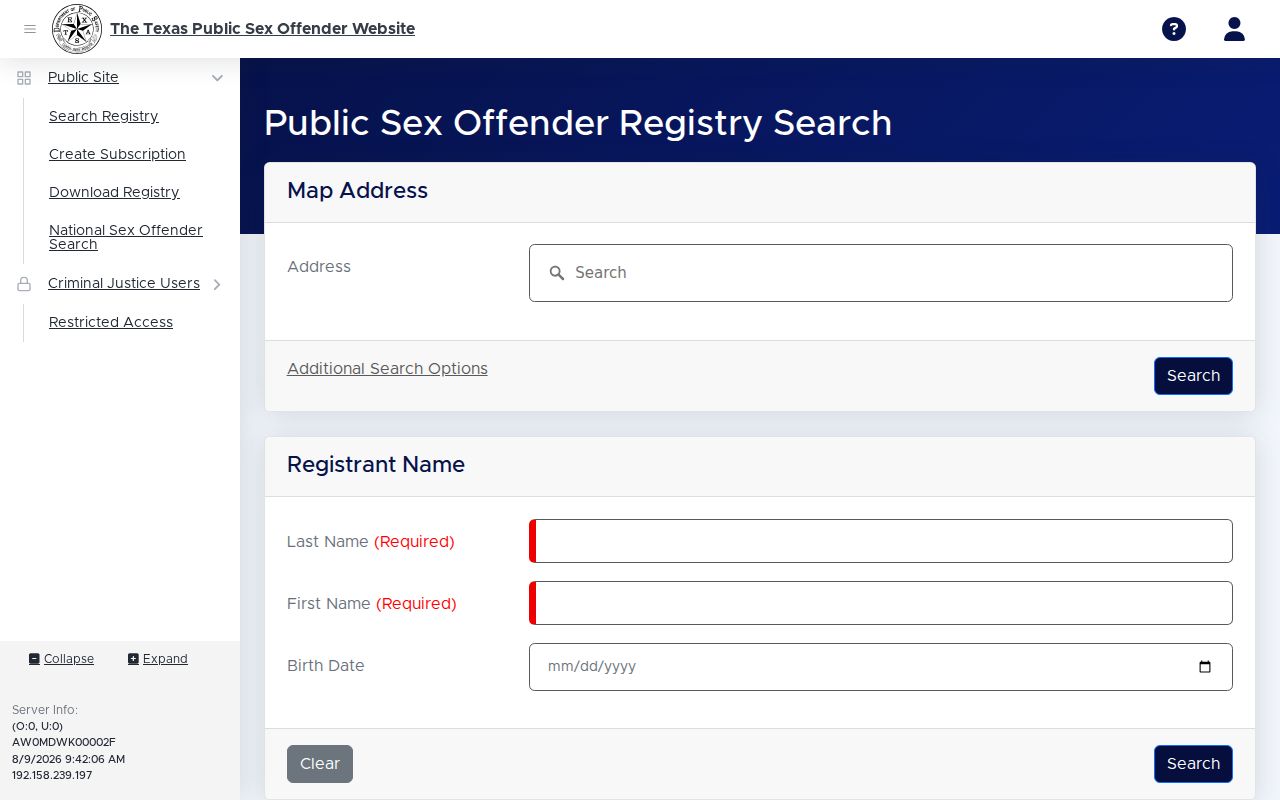
Open each profile rather than relying on a map pin alone. Match several identity fields.
How to Search the Texas Registry
Choose the mode that fits the question. A name query works for a known person. Address and radius searches aid neighborhood awareness. Brewster spans 6,183.8 square miles, so an Alpine radius is not a countywide search.
- Open the official DPS search and review its conditions.
- Enter a name or choose address, city, ZIP, or county.
- Compare the list and map with known identity details.
- Open the profile and read status, offense, dates, and authority.
| Field Label | Type | Required | Notes |
|---|---|---|---|
| Last name | Text | Conditional | Known-person field. |
| First name | Text | No | Narrows a surname. |
| City or ZIP | Text | No | Use Alpine or the relevant ZIP. |
| County | Select | No | Choose Brewster. |
| Address and radius | Map | Conditional | Measures from one point. |
Alpine Address or County Filter
An Alpine address search finds profiles within the selected distance. It does not cover Marathon, Study Butte, Terlingua, the park, and remote land unless the radius reaches them. A county filter is broader. Run more than one view when geography matters, and note the search date because profiles change.
Brewster Radius Choice Matters
Countywide awareness may require several location searches plus the Brewster filter. A result outside the chosen radius is not an omitted registration; it is outside the question sent to the map. Likewise, a county selection follows the county value in the data and should not be read as a mileage boundary around Alpine.
Save or note the search terms and date when following up with an authority. Clear search details help the Sheriff or Alpine Police reproduce the concern without guessing which map view produced it.
Inside a Registry Profile
A Texas profile can show a photo, names and aliases, physical traits, age, address, status, risk level where assigned, verification data, offense, conviction date, victim age group, punishment, supervision, marks, school links, and vehicles.
Match the photograph and physical details with the full name and aliases. Then read the offense description, conviction or adjudication date, punishment, and supervision status as separate fields. Victim age may be shown as a category while victim identity remains protected. Vehicle and higher-education information appears only when the reporting rules make it applicable.
| Name & Aliases | Registered identity and reported names. |
|---|---|
| Photo & Description | Image and physical identifiers. |
| Registered Address | Residence or geographic location. |
| Offense & Statute | Description, law, date, and victim-age group. |
| Risk Information | Risk level where assigned. |
| Registration Status | Status, verification, and local authority. |
Texas Keeps Some Data Private
DPS excludes Social Security and driver-license numbers, phones, online identifiers, employer details, confidential data, and victim identity. Juvenile information ordered nonpublic is also excluded.
The public profile interface shows released fields.
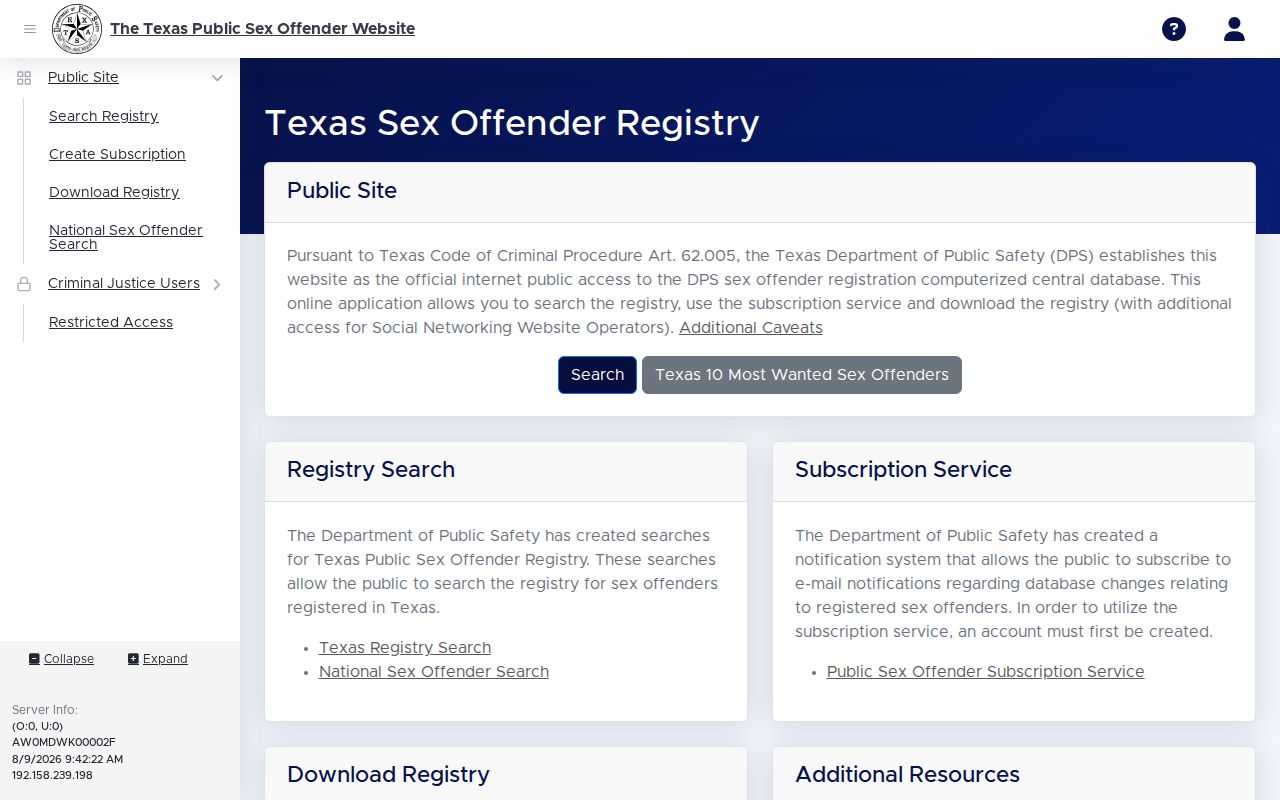
A hidden field is not proof DPS never collected it.
Texas Registration Levels and Requirements
Texas does not put each profile into a simple federal Tier I, II, or III chart. Duration turns on the reportable case, whether the offense is sexually violent, age, dates, and Chapter 62. Risk assessment for notice is separate.
| Level / Tier | Duration | Verification Frequency |
|---|---|---|
| Lifetime categories | Lifetime under Section 62.101 | As statute requires |
| Other reportable cases | Often ten years after release | As statute requires |
| Juvenile cases | May be modified or exempted | By court and statute |
High-Risk Notification Postcards
DPS may mail notices when a high-risk registrant or civilly committed sexually violent predator enters a community. This differs from ordinary search results.
The Texas program page explains registration and notice.
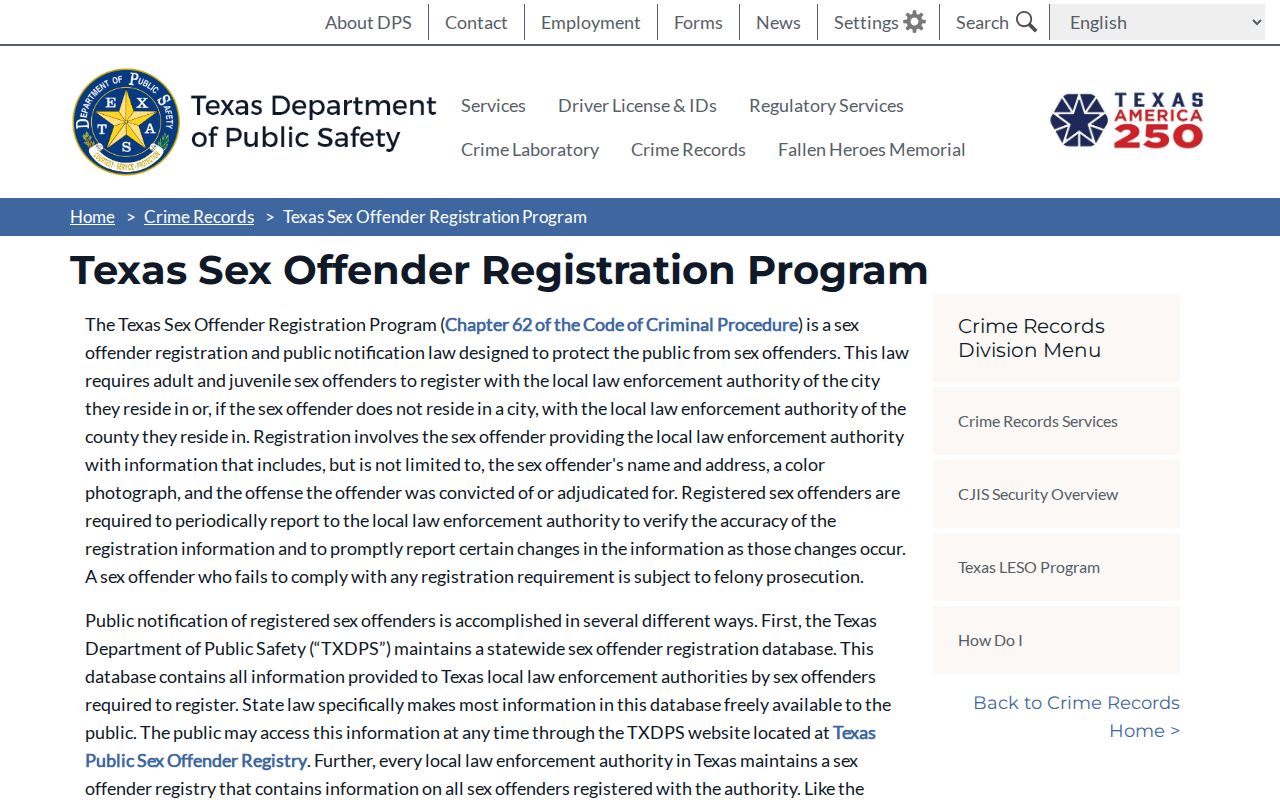
Read actual risk data rather than inventing a federal tier.
Sheriff or Alpine Police Authority
The local authority depends on residence. Contact the Brewster Sheriff for county jurisdiction or Alpine Police for city registration. Give the profile identifier and state the suspected error or noncompliance. Call emergency services only for immediate danger.
Report Suspected Brewster Noncompliance
Use the local authority shown in the profile when an address, verification status, or other registration fact appears wrong. Describe the observed issue and provide the public profile identifier. Do not investigate at a residence or contact household members.
Failure to comply with Texas registration duties can be prosecuted as a felony, but the public searcher does not decide whether a violation occurred. Law enforcement compares the report with nonpublic records and the applicable Chapter 62 duty.
Use NSOPW After Texas Search
NSOPW adds participating jurisdictions nationwide when Texas alone is too narrow.
The official NSOPW search provides that layer.
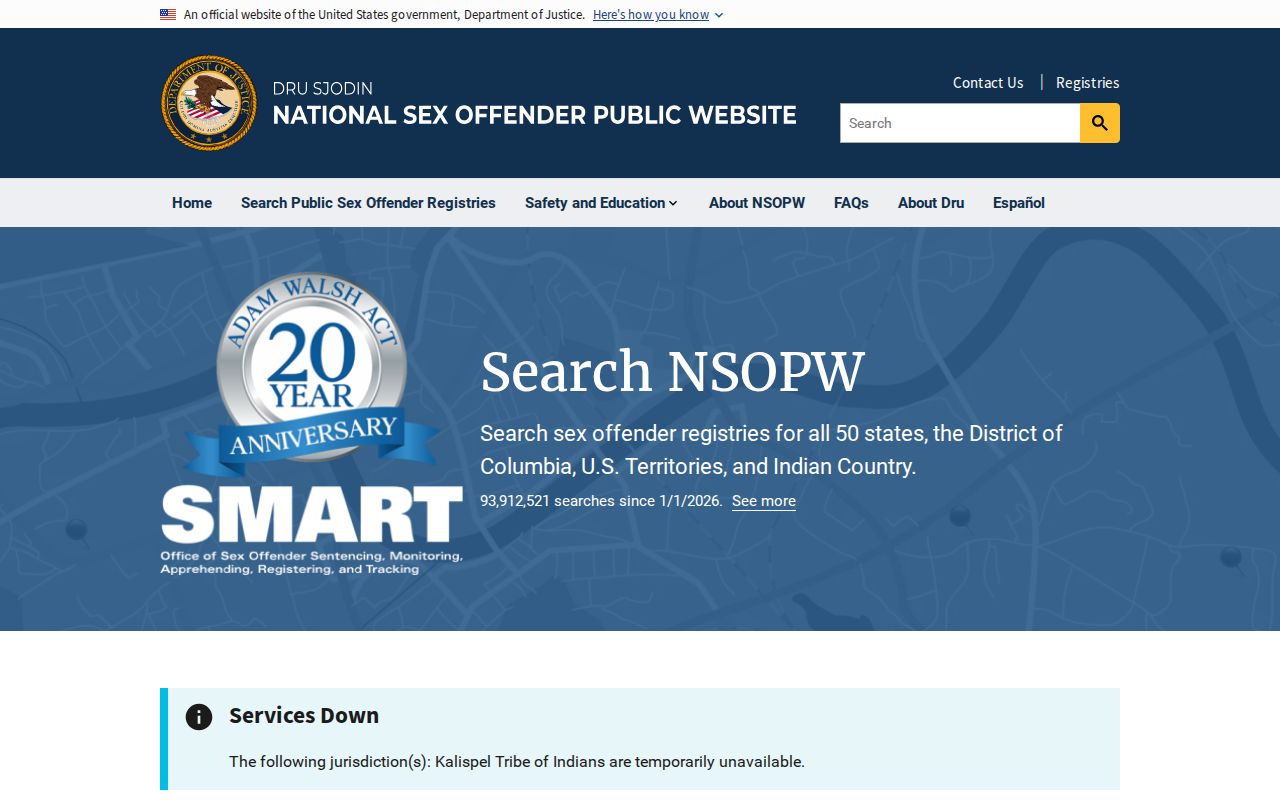
Return to the source jurisdiction for the most specific profile.
Profile Status Is Not Custody
Registration status describes compliance or reporting information in the registry. It does not state that a person is in Brewster County Jail, Texas prison, or federal custody. Use the correct custody locator for that separate question.
Nor does one registry profile list every criminal proceeding. Court files, arrest reports, and the DPS criminal-history repository serve different purposes. Keep the registry search focused on Chapter 62 registration information.
Victim Identity Remains Nonpublic
A public profile may state a victim age category because it helps describe the reportable offense. It does not publish the victim's name or other identifying information. Phone numbers, online identifiers, employer data, driver-license numbers, and Social Security numbers also remain outside the public display.
These limits protect private data while leaving the statutory registration facts available for community awareness. Do not try to infer or expose a victim's identity from the public fields.
Community Notification and Lawful Use
Registry data supports personal and family safety and community awareness. It is not proof of current custody, a new offense, or every court case. Check the verification date, address, status, offense, and local authority.
Use registry data lawfully: Do not harass, threaten, intimidate, or commit a crime against a registrant or household. Report suspected noncompliance to the listed registration authority.
Texas community notification may include the DPS postcard process for a high-risk registrant or civilly committed sexually violent predator. Public registry access and that added notice operate together, but they are not the same classification system. Base safety decisions on current official data and lawful conduct.
For a profile that appears stale, capture the public identifier, reported location, and verification date before contacting the local authority. Explain the discrepancy without sharing extra personal data. The Sheriff or Alpine Police can compare the report with records not shown to the public. Registry users should not attempt surveillance or direct contact, since official follow-up is the lawful way to test suspected noncompliance.